Epic data integration
Designed and supported data ingestion workflows for Epic Clarity and Epic Caboodle, so structured clinical and operational datasets could be integrated into modern analytical environments.

How Proventus Analytics helped a large healthcare organization move Epic Clarity and Caboodle data, HL7 and FHIR feeds into a scalable, governed Azure Databricks lakehouse built for analytics, interoperability and AI.
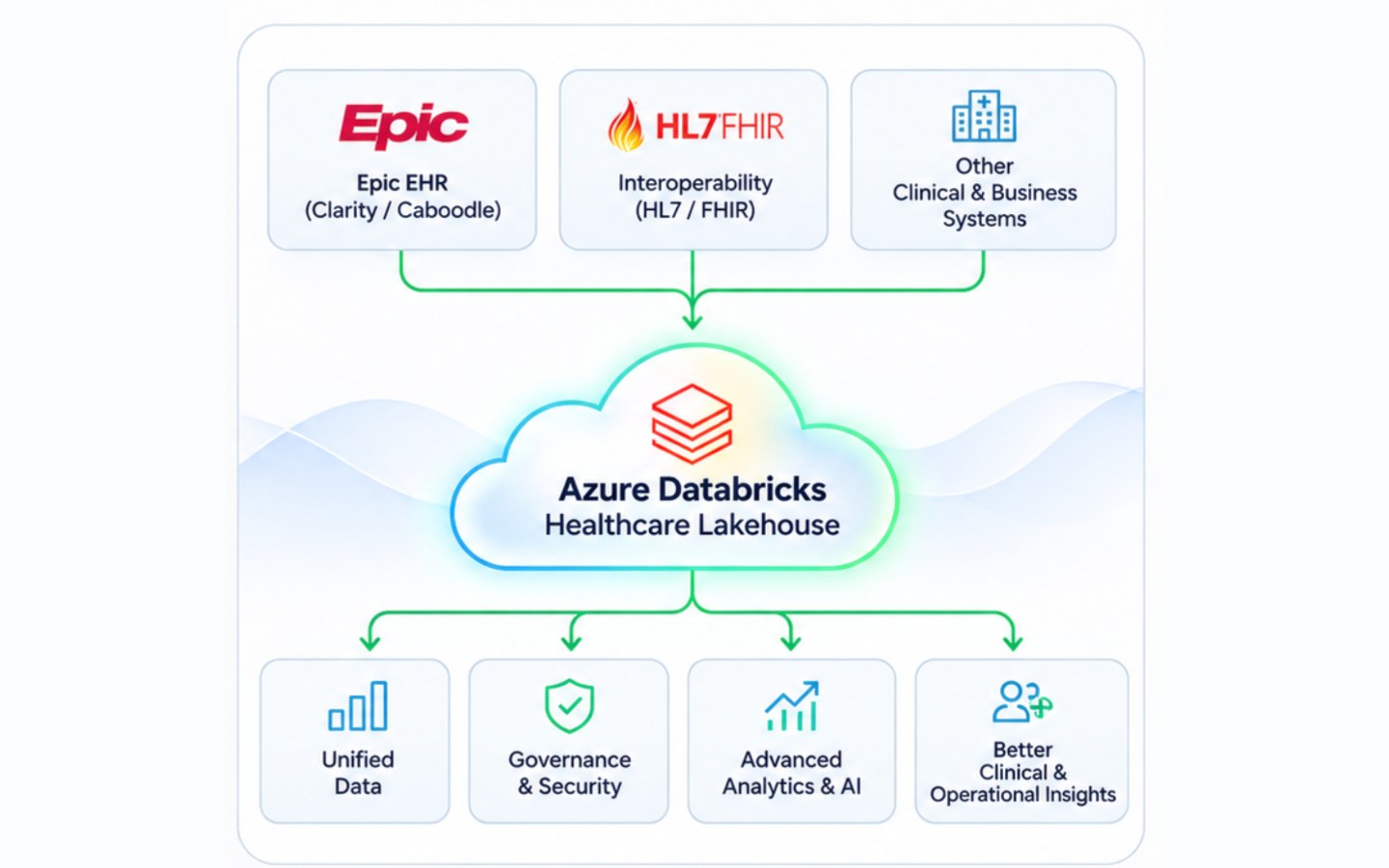
A large healthcare organization needed to modernize its legacy clinical data infrastructure to improve data accessibility, interoperability and enterprise analytics.
Clinical and operational data was distributed across Epic EHR systems, relational databases and healthcare interfaces. That made consistent data integration, scalable processing and timely access to information difficult.
The organization needed a modern, cloud-based data architecture that could handle complex healthcare datasets while maintaining data quality, security and regulatory compliance.
Proventus Analytics supported the modernization of the organization's healthcare data infrastructure, focusing on Epic data integration, cloud-based data engineering and scalable analytics.
Designed and supported data ingestion workflows for Epic Clarity and Epic Caboodle, so structured clinical and operational datasets could be integrated into modern analytical environments.
Developed and optimized data engineering pipelines on Azure Databricks and Azure Data Lake Storage. The architecture uses layered processing for ingestion, transformation, validation and analytics-ready datasets.
Supported healthcare interoperability requirements for HL7 and FHIR data exchange, integrating clinical information from EHR systems into centralized data platforms.
Implemented data validation and reconciliation to improve consistency across source systems and analytical environments, with secure access to sensitive healthcare information.
Healthcare data modernization is the move from fragmented, legacy clinical and operational data systems to a modern, cloud-based data platform. It brings EHR data, such as Epic Clarity and Caboodle, together with HL7 and FHIR feeds and other sources into one governed environment that supports analytics, interoperability and AI.
Epic Clarity is a relational reporting database populated from Epic's operational Chronicles database, with thousands of normalized tables. Epic Caboodle is Epic's dimensional data warehouse, organized into fact and dimension tables for analytics, and it can combine Epic data with data from other sources. Many modernization projects ingest both.
Azure Databricks provides a lakehouse architecture on Azure Data Lake Storage that scales to large clinical datasets, supports layered processing from raw ingestion to analytics-ready tables, and serves SQL analytics, data science and machine learning from the same governed data.
HL7 v2 messages and FHIR resources carry clinical information between EHRs and other healthcare systems. Integrating them into a central data platform alongside Epic reporting data gives a more complete and timely view of clinical activity, and supports interoperability requirements.
Proventus Analytics builds validation and reconciliation into the pipelines, comparing data across source systems and analytical environments, and designs platforms with controlled access to sensitive healthcare information to support security and compliance requirements, including HIPAA.
Engagements begin with a two-week discovery workshop to map the data, systems and goals, followed by a costed blueprint and plan, then delivery in sprints with regular demos, and finally launch, handover and ongoing support.
By combining deep healthcare domain knowledge with modern cloud data engineering, Proventus Analytics helps healthcare organizations transform complex EHR data environments into scalable, governed and AI-ready data platforms.
Epic, Epic Clarity and Caboodle are trademarks of Epic Systems Corporation. HL7 and FHIR are registered trademarks of Health Level Seven International. Databricks and Azure are trademarks of their respective owners. Their use here does not imply endorsement or partnership.